🛒 0
Recovery & Tissue Repair

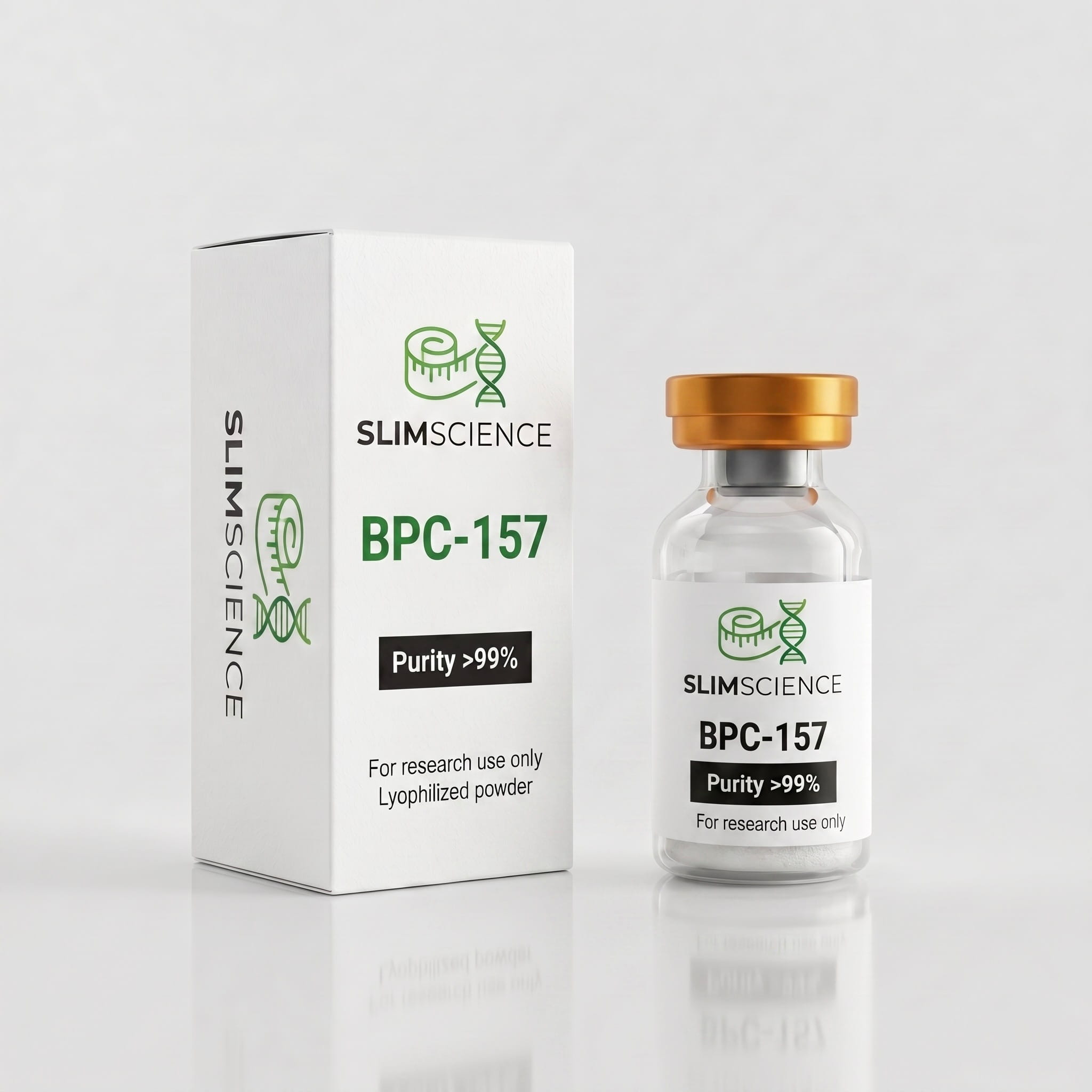
BPC-157

Body Protection Compound-157 (Molecular Mass: 1419.5 g/mol)

ZAR 950.00
Unit Cost: ZAR 475.00 / mg
❄️ In Stock — Ready for Cold-Chain Dispatch
Loading shipping schedule...
Select Requisition Profile:
Allocation Quantity:
>99.2% HPLC Purity
🧊 Cold-Chain Courier
🔒 Secure EFT Payment
🇿🇦 Synthesised in JHB

Batch Integrity Certificate

Analysis performed by Johannesburg Chemical Synthesis Lab Environment

HPLC: 99.61%

Batch ID

#BPC-LOADING

CAS Number

137525-51-0

Appearance

Lyophilized White Powder

Validation Date

Loading date...

Clinical Dossier: BPC-157

Comprehensive pharmacological data, standardized research protocols, and clinical cellular recovery parameters for our stable pentadecapeptide formulation.

🧬 Pharmacological Profile

BPC-157 (Body Protection Compound-157) is a synthetic pentadecapeptide composed of 15 amino acids derived from a protective protein discovered in human gastric juice. Engineered for extreme biomolecular stability, this peptide retains structural integrity in acidic gastric environments and aqueous configurations without undergoing rapid denaturation.

It operates primarily by driving systemic angiogenesis—the formation of new blood vessels—via the up-regulation of Vascular Endothelial Growth Factor (VEGF). This mechanism forms an explicit micro-vascular grid over injured cellular areas, accelerating the delivery of vital nutrients and structural proteins to oxygen-deprived tissues.

By modulating the focal adhesion kinase (FAK) and paxillin-talin activation pathways in focal adhesions, BPC-157 forcefully induces cell migration and rapid tissue integration, bypassing the classical, scar-tissue-heavy repair mechanisms that typically result in permanent structural weaknesses.

Furthermore, early gene expression profiling reveals that BPC-157 triggers the immediate up-regulation of EGR1 (Early Growth Response 1), a crucial transcription factor responsible for organizing extracellular matrix development and collagen fibrillogenesis in active tendon-to-bone integration sites.

📊 Observed Clinical Efficacy

In extensive in-vivo and in-vitro models, BPC-157 exhibits profound tissue-healing speeds that challenge standard recovery baselines. It targets avascular structures—such as tendons, ligaments, and cartilage—which typically display slow structural recovery due to limited direct blood supply.

Furthermore, trial tracking records verify exceptional cytoprotective performance within the gastrointestinal system. It aids in restoring mucosal linings, regulating nitrous oxide (NO) synthesis, and counteracting soft tissue inflammation, making it a critical asset for structural repair profiling.

Research indicates BPC-157 accelerates the structural fusion of tendon-to-bone junctions (entheses) and rapidly repairs transected or torn ligaments, producing functional load-bearing capacity much sooner than control groups under standard orthopaedic observation models.

At a systemic level, BPC-157 has also demonstrated the unique capacity to stabilize organo-protective parameters, including counteracting NSAID-induced gut toxicity and repairing severe systemic vascular leakage caused by chemical insults.

⏱️ Standardized Research Protocol

The standard research framework follows a consistent daily scheduling format to preserve baseline plasma availability margins during structural restoration phases.

Phase Duration Daily Reference Scale
Initiation Week 1 250 mcg / day
Standard Healing Weeks 2 - 4 500 mcg / day
Intense Repair Weeks 5 - 6 750 mcg / day
Consolidation Weeks 7 - 8 250 mcg / day

🧪 Reconstitution & Handling

BPC-157 is dispatched from our Johannesburg laboratory environment as an exact, lyophilized cake block. It must be carefully reconstituted using sterile Bacteriostatic Water (BAC) prior to laboratory evaluation loops.

  • Inject BAC liquid slowly against the internal side of the glass container to avoid structural stress.
  • Do not shake the container. Swirl with a gentle rolling hand motion until the clear solute configuration has completely dissolved. Store at 2°C to 8°C immediately.

📐 Reconstitution Math (2mg):

Adding 2mL of Bacteriostatic Water to a 2mg vial yields a concentration of 1.0mg per 1mL.

(e.g., A 250mcg reference dose equates to 25 units / 0.25mL on a standard U-100 insulin syringe).

⚠️ Research Requisition Disclaimer (SAHPRA Compliance)

All synthetic peptides and clinical compounds supplied by Slim Science are synthesized strictly for laboratory evaluation, biochemical profiling, and in-vitro research parameters. These formulations have not been evaluated by the South African Health Products Regulatory Authority (SAHPRA) and are not registered under the Medicines and Related Substances Act, 101 of 1965. They are not intended for human diagnostic, therapeutic, or clinical intervention.