πŸ›’ 0
Dermal Remodeling & Collagen Synthesis

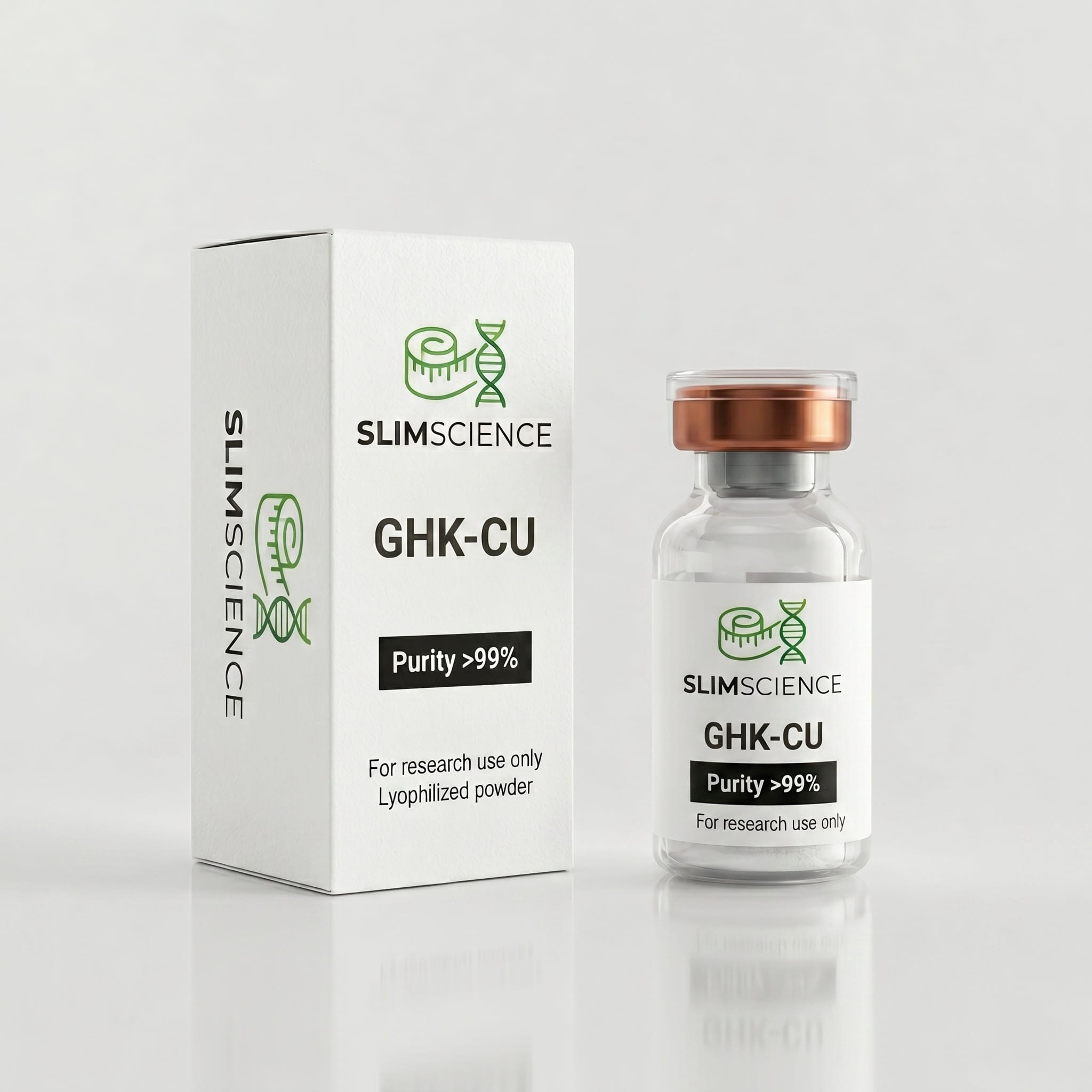
GHK-Cu

Copper Peptide Complex (Molecular Mass: 340.38 g/mol)

ZAR 990.00
Unit Cost: ZAR 49.50 / mg
❄️ In Stock β€” Ready for Cold-Chain Dispatch
Loading shipping schedule...
Select Requisition Profile:
Allocation Quantity:
βœ“ >99.2% HPLC Purity
🧊 Cold-Chain Courier
πŸ”’ Secure EFT Payment
πŸ‡ΏπŸ‡¦ Synthesised in JHB

Batch Integrity Certificate

Analysis performed by Johannesburg Chemical Synthesis Lab Environment

HPLC: 99.52%

Batch ID

#GHK-LOADING

CAS Number

89030-95-5

Appearance

Vibrant Blue Lyophilized Powder

Validation Date

Loading date...

Clinical Dossier: GHK-Cu

Comprehensive pharmacological data, standardized reconstitution calculations, and clinical dermal remodeling parameters for our highly active tripeptide complex.

🧬 Pharmacological Profile

GHK-Cu (Glycyl-L-Histidyl-L-Lysine Copper) is a naturally occurring, copper-binding tripeptide found in human plasma. It possesses a uniquely high binding affinity for copper ions (Cu2+), forming complex coordinate structures that facilitate cellular copper uptake across biological membranes.

At a genetic and transcriptional level, GHK-Cu serves as a master regulator of tissue regeneration. It modulates the expression of over 4,000 human genes, aggressively upregulating metalloproteinases to clear damaged, cross-linked extracellular matrix proteins, while triggering fibroblasts to mass-produce structured, un-crosslinked Type I and Type III collagen, along with elastin and glycosaminoglycans.

Furthermore, GHK-Cu regulates structural scarring by inducing decorin expression, a small leucine-rich proteoglycan that binds to and inhibits Transforming Growth Factor-beta (TGF-beta), preventing aberrant fibrotic scar configurations in injured dermal zones.

πŸ“Š Observed Clinical Efficacy

In extensive in-vivo skin modeling and clinical repair observation, direct administration of GHK-Cu displays profound regenerative metrics. It completely outpaces standard cosmetic topical products by delivering therapeutic active concentrations straight to avascular dermal matrices.

Researchers note rapid dermal thickening, pronounced tightening of loose or photo-aged skin (frequently observed post-weight management protocols), and accelerated wound healing with minimized scar tissue boundaries.

In addition to dermal remodeling, GHK-Cu is widely studied for its potent angiogenic properties. By upregulating vascular endothelial growth factor (VEGF), it stimulates micro-vascular development in damaged hair follicles, effectively reversing follicular miniaturization and promoting healthy hair follicle anchorage and diameter.

⏱️ Standardized Research Protocol

The standard research framework follows a consistent daily scheduling format to preserve baseline plasma availability margins during structural restoration phases.

Phase Duration Daily Reference Scale
Initiation Weeks 1 - 2 1.0 mg / day
Standard Remodeling Weeks 3 - 6 2.0 mg / day
Intense Remodeling Weeks 7 - 8 3.0 mg / day
Cycle Duration Rest Period 4 Weeks On / 2 Off

πŸ§ͺ Reconstitution & Handling

GHK-Cu is dispatched from our Johannesburg laboratory environment as a vivid blue, lyophilized cake block. It must be carefully reconstituted using sterile Bacteriostatic Water (BAC) prior to laboratory evaluation loops.

  • Inject BAC liquid slowly against the internal side of the glass container to avoid structural stress.
  • Do not shake the container. Swirl with a gentle rolling hand motion until the deep, clear blue solute has completely dissolved. Store at 2Β°C to 8Β°C immediately.

πŸ“ Reconstitution Math (20mg):

Adding 2mL of Bacteriostatic Water to a 20mg vial yields a concentration of 10mg per 1mL.

(e.g., A standard 2mg reference dose equates to 20 units / 0.2mL on a standard syringe).

⚠️ Research Requisition Disclaimer (SAHPRA Compliance)

All synthetic peptides and clinical compounds supplied by Slim Science are synthesized strictly for laboratory evaluation, biochemical profiling, and in-vitro research parameters. These formulations have not been evaluated by the South African Health Products Regulatory Authority (SAHPRA) and are not registered under the Medicines and Related Substances Act, 101 of 1965. They are not intended for human diagnostic, therapeutic, or clinical intervention.